PPIA Board Governance
PPIA's governance structure ensures oversight, accountability, and effective leadership in support of its mission
Organizational Structure & Governance
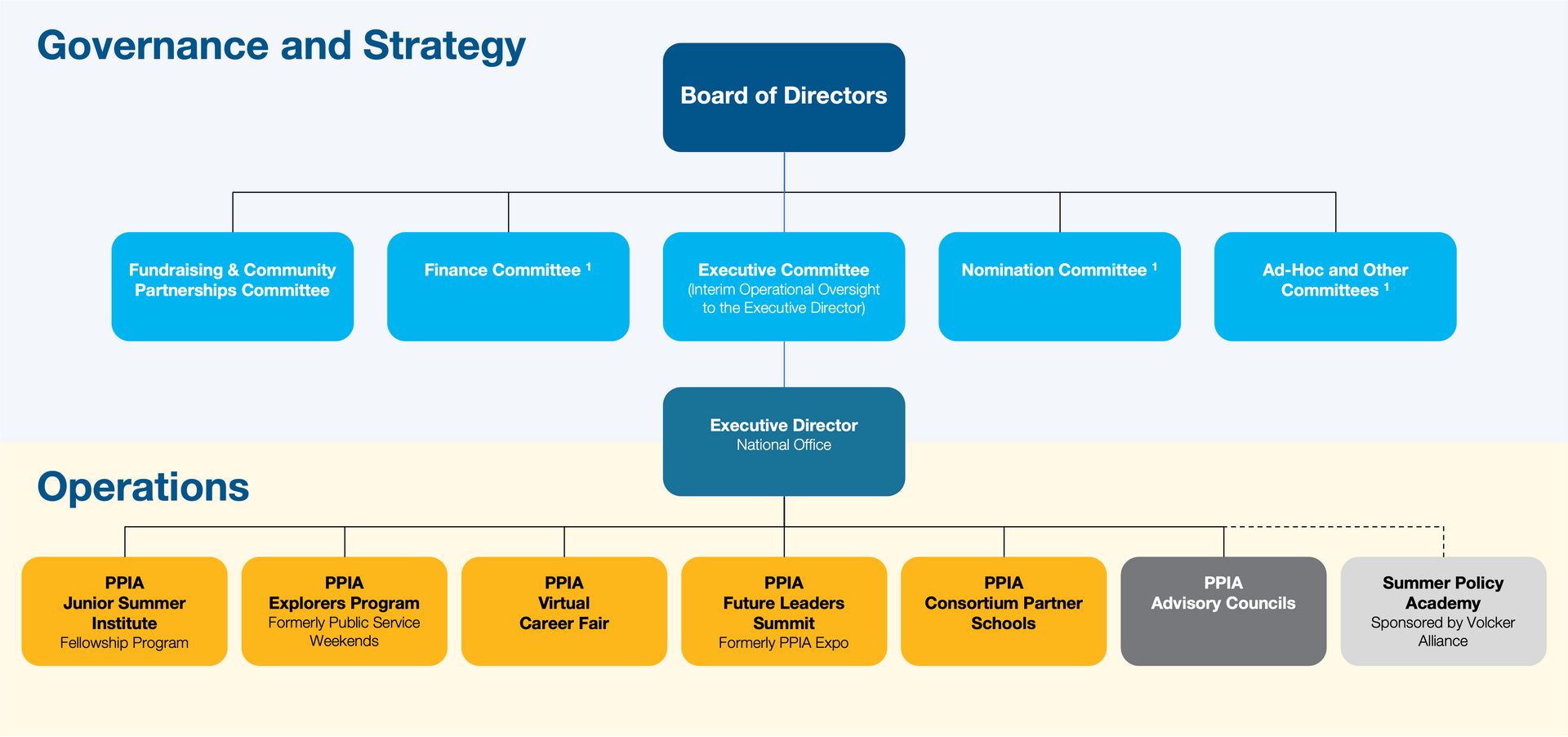
1. Several standing committees were not fully constituted in recent years due to a limited pool of available board talent. PPIA is now in the midst of a significant organizational turnaround, and these committees are in the process of being formally reestablished.
Board of Directors and Committees
PPIA is governed by a Board of Directors responsible for strategic oversight, fiduciary stewardship, and organizational accountability. In the interim, members of the Executive Committee of the Board of Directors have assumed responsibility for key committee functions to ensure continuity and forward progress. The Executive Committee is comprised of the Chair, Vice Chair, Treasurer, and Secretary, and provides interim operational oversight of the Executive Director.
Board Committees include:
- Fundraising & Community Partnerships Committee: This committee advances PPIA’s revenue strategy by strengthening relationships with donors, sponsors, foundations, and institutional partners. It supports fundraising planning, partnership development, and long-term financial sustainability.
- Finance Committee: The Finance Committee oversees PPIA’s financial health, including budgeting, financial controls, reporting, and audit readiness. It ensures responsible stewardship of resources and alignment with nonprofit best practices.
- Nomination Committee: The Nomination Committee leads board recruitment, onboarding, and succession planning to ensure the Board reflects the skills, experience, and leadership capacity needed to guide PPIA forward.
- Ad-Hoc and Other Committees: From time to time, the Board may establish ad-hoc or special committees to address emerging priorities, initiatives, or organizational needs.
Executive Director and National Office
The Executive Director (ED) serves as an advisor to the Board of Directors and oversees the day-to-day operations of PPIA. The ED leads the PPIA National Office, which is responsible for the general management and execution of PPIA’s mission and programs.
The National Office oversees and supports the following core functions:
Stakeholder & Relationship Management
- Liaison to key stakeholders, including Deans, the Board, funders, alumni, and partners
- Relationship management across institutions and partner organiza
Program Operations & Delivery
- Junior Summer Institute (JSI) application process and JSI workgroup coordination
- Planning and execution of the PPIA Expo
- Support for Public Service Weekend (PSW) hosts and programs
Financial Management & Sustainability
- Budget development and financial oversight
- Financial management, controls, and reporting
- Fundraising and development activities
Communications & Digital Presence
- Communications strategy, messaging, and outreach
- Website management and digital presence
Governance, Compliance & Board Support
- Board operations and board committee coordination
- Nonprofit compliance and governance requirements
The PPIA National Office currently maintains a mailing address only and does not operate a physical office location. The National Office leadership and staff work virtually. Given ongoing budgetary constraints, PPIA operates with a highly accountable leadership team working at full-time capacity through a flexible, contract-based model that preserves agility, fiscal discipline, and operational effectiveness. The current mailing address for the PPIA National Office is 712 H Street NE #1214, Washington, DC.
Programs and Partners
- PPIA Junior Summer Institute (JSI): JSI is PPIA’s flagship, fully funded summer program that prepares high-potential undergraduate students for graduate study in public policy and international affairs. Fellows receive rigorous academic training, mentoring, and exposure to public service careers through host universities across the country.
- PPIA Explorers Program (formerly Public Service Weekend)
ThePPIA Explorers Program offers students a short, immersive experience to explore public service and policy careers before committing to a specific academic or professional path. Through site visits, conversations with practitioners, and hands-on learning, participants gain clarity about their interests and next steps.
- PPIA Virtual Career Fair
ThePPIA Virtual Career Fair connects PPIA Fellows and alumni with employers, graduate programs, and mission-driven organizations working in public service and global affairs. The program expands access to networks, opportunities, and real-time career insights regardless of geography.
- PPIA Future Leaders Summit (formerly PPIA Expo)
The Future Leaders Summit convenes students, alumni, educators, and partners to build leadership skills, share best practices, and strengthen pathways into public service. The Summit highlights emerging issues, career trajectories, and cross-sector collaboration.
- Consortium School Partners
PPIA’s Consortium School Partners includes over 60 public policy and international affairs programs committed to supporting Fellows’ access to graduate education. Consortium schools provide recruitment, financial support, and academic pathways for PPIA participants.
- PPIA Advisory Councils
PPIA Advisory Councils, including alumni leaders, provide strategic guidance, mentorship, and program support across the PPIA network. Councils play a key role in strengthening career development, engagement, and long-term community impact.
- Volcker Alliance Partnership – Summer Policy Academy
Through its partnership with the Volcker Alliance, PPIA supports theSummer Policy Academy, which introduces students to policy analysis, public leadership, and applied problem-solving. The collaboration expands early exposure to public service careers and complements PPIA’s broader pipeline programs.
- Institutional Partners
PPIA’s work is supported by key member associations and institutional sponsors dedicated to advancing academic programs and professional pathways in public policy and international affairs.