
KYLE BECERRA
How PPIA, Schwarzman Scholars, and a global perspective shaped his public service journey.
THE PHONE CALL AFTER PIZZA
Kyle Becerra was finishing a Papa John's pizza when he decided he hadn't gotten in.
Around the world, Schwarzman Scholars finalists were receiving phone calls. Messages were flooding a group chat.
Someone got a call.
Then another.
Then another.
Hours passed.
Kyle heard nothing.
Convinced he had not been selected, he called his mother.
"I told her I didn't get it," he recalled.
Less than ten minutes later, his phone rang.
The caller ID showed New York City.
On the other end was a representative from Schwarzman Scholars.
Kyle had been selected.
"I ugly cried," he said, laughing. "I absolutely ugly cried."
A student who had never left the United States before was heading to China.
The phone call represented far more than admission to one of the world's most prestigious and competitive graduate fellowships.
It was the latest chapter in a journey that had already taken him from a continuation high school in Los Angeles to community college, Stanford University, PPIA's Princeton Junior Summer Institute, Schwarzman Scholars at Tsinghua University in Beijing, and ultimately the center of policymaking in California.
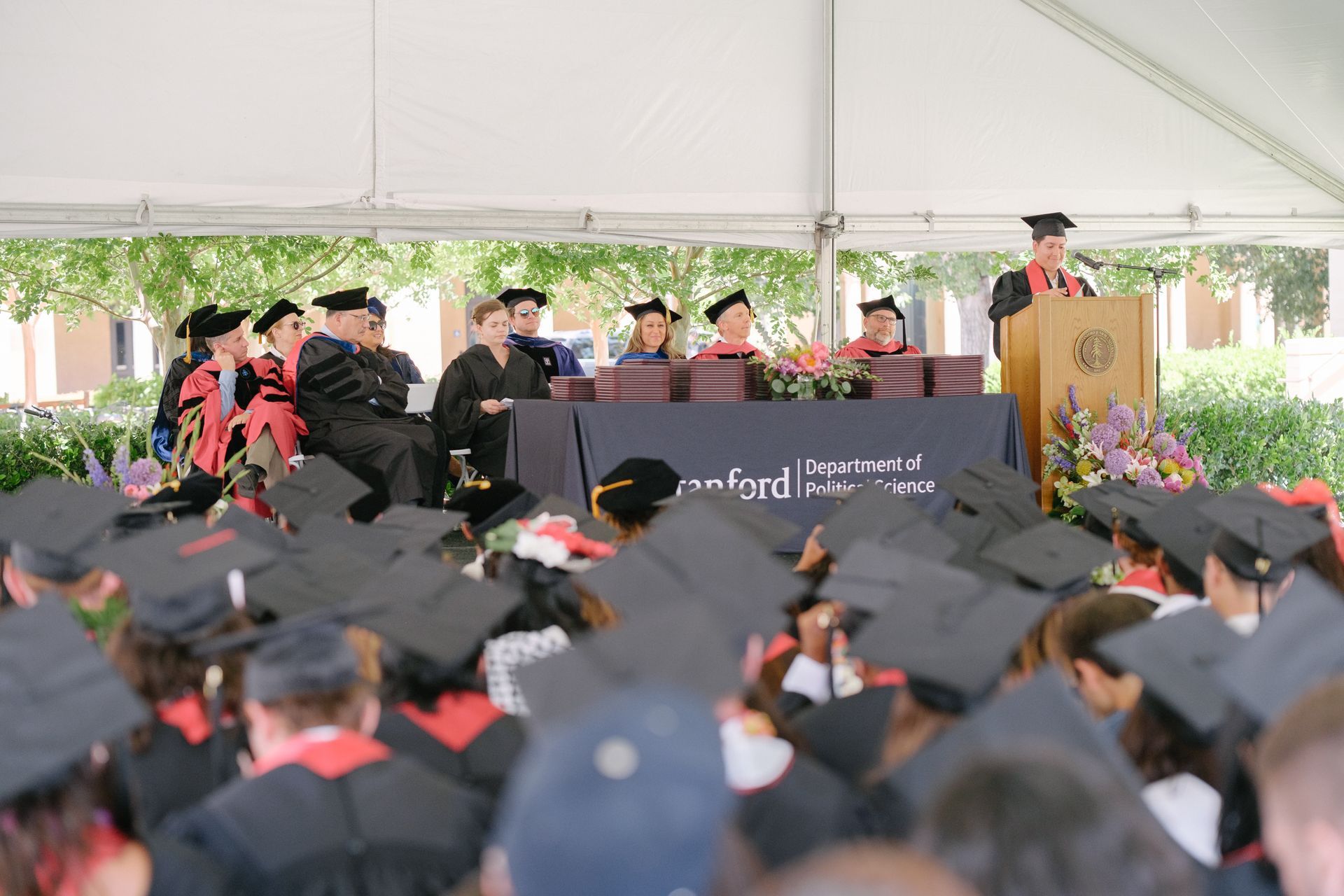
Ask Kyle Becerra what he enjoys most about public service, and he won't talk first about legislation, politics, or government.
He talks about people.
The families affected by public policy. The students looking for opportunities. The communities whose lives can be improved through thoughtful leadership and effective government.
For Kyle, public service has always been about helping people.
Today, that commitment has taken him to the California State Assembly, where he serves as a Jesse M. Unruh Assembly Fellow supporting Assemblymember Jesse Gabriel, Chair of the Assembly Budget Committee. He helps analyze legislation, develop policy recommendations, and contribute to decisions that affect millions of Californians.
It is demanding work.
Kyle loves it.
"This is what I went to college for.
This is what I did PPIA for."
Kyle Becerra
Yet when Kyle reflects on how it all happened, he rarely begins with Stanford, PPIA, Schwarzman, or Sacramento.
He starts with Google.
The Application He Almost Didn't Submit
When Schwarzman Scholars entered the picture, Kyle wasn't convinced he belonged among the applicants.
The program attracts exceptional students and young professionals from around the world.
Many arrive with accomplishments that can make even highly qualified candidates question themselves.
Kyle felt that uncertainty.
A fellow PPIA student offered simple advice.
"You should apply. What's the worst that can happen?"
So, he did.
What followed was one of the most challenging application processes he had ever experienced.
The essays, recommendations, interviews, and application materials required something more difficult than assembling credentials.
They required self-reflection.
Why public service?
Why leadership?
What experiences had shaped him?
What story was he trying to tell?
One component stood out in particular: an optional one-minute video.
Standing in front of the continuation school he once attended, Kyle reflected on the experiences that had shaped him.
He spoke about helping support his family by installing wood floors.
He spoke about educators who believed in him, and who helped him accomplish great things and live through transformative experiences.
He spoke about obstacles that could have defined his future but ultimately did not.
Most importantly, he stopped trying to sound impressive.
He focused on being honest.
"My story is my superpower," he said.
Looking back, Kyle believes the application process forced him to understand himself in a way he never had before.
Every essay, interview, and reflection required him to examine not only what he had accomplished, but why those experiences mattered.
He found himself connecting the threads that had shaped his journey: family, community college, Stanford, PPIA, public service, and leadership.
By the end of the process he had a deeper understanding of who he was, what motivated him, and the kind of leader he hoped to further develop into.
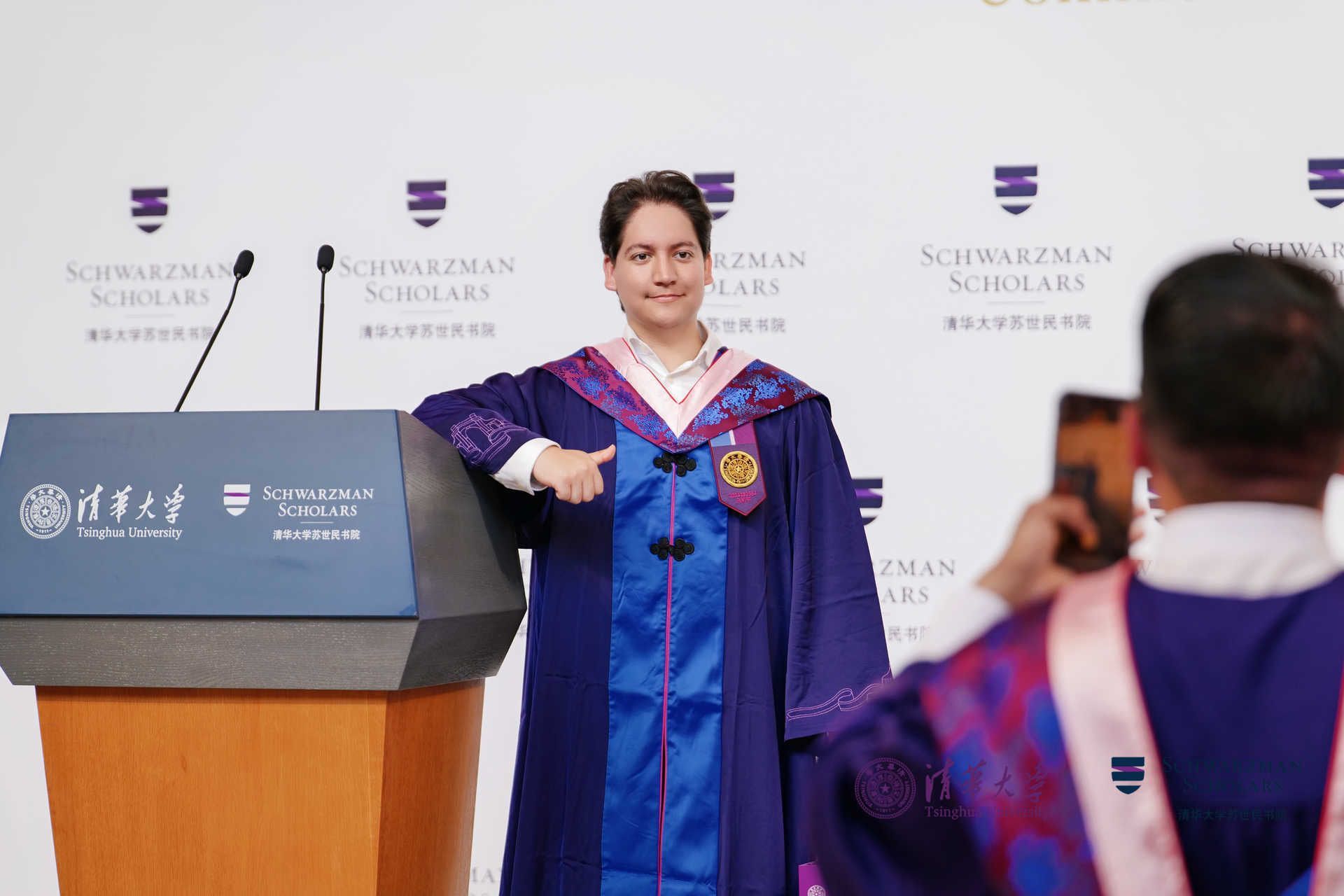
The Call
Months later, the phone call that arrived after pizza changed everything.
By then, Kyle had already done the harder work: applying, reflecting, interviewing, and learning how to tell his own story.
The call did more than tell him he had been selected.
It confirmed that the story he once wondered whether he should tell was exactly the story that mattered.
A student who once searched Google for opportunities no one had told him about was heading to China.
Why China?
For many students interested in public service, the immediate question is simple: Why China?
Kyle once asked himself the same question.
Before Schwarzman Scholars, he had never traveled outside the United States.
Growing up, visiting China was an opportunity he never thought he would have, nor did he fully understand why so many people spoke about its importance.
What changed was a growing realization, especially brought on by an advanced seminar he took during college with a former U.S. Ambassador, that China would play a significant role in the future of economics, diplomacy, technology, public policy, and global affairs.
For Kyle, Schwarzman Scholars offered something he could not find anywhere else: the opportunity to experience China firsthand rather than learn about it from a distance.
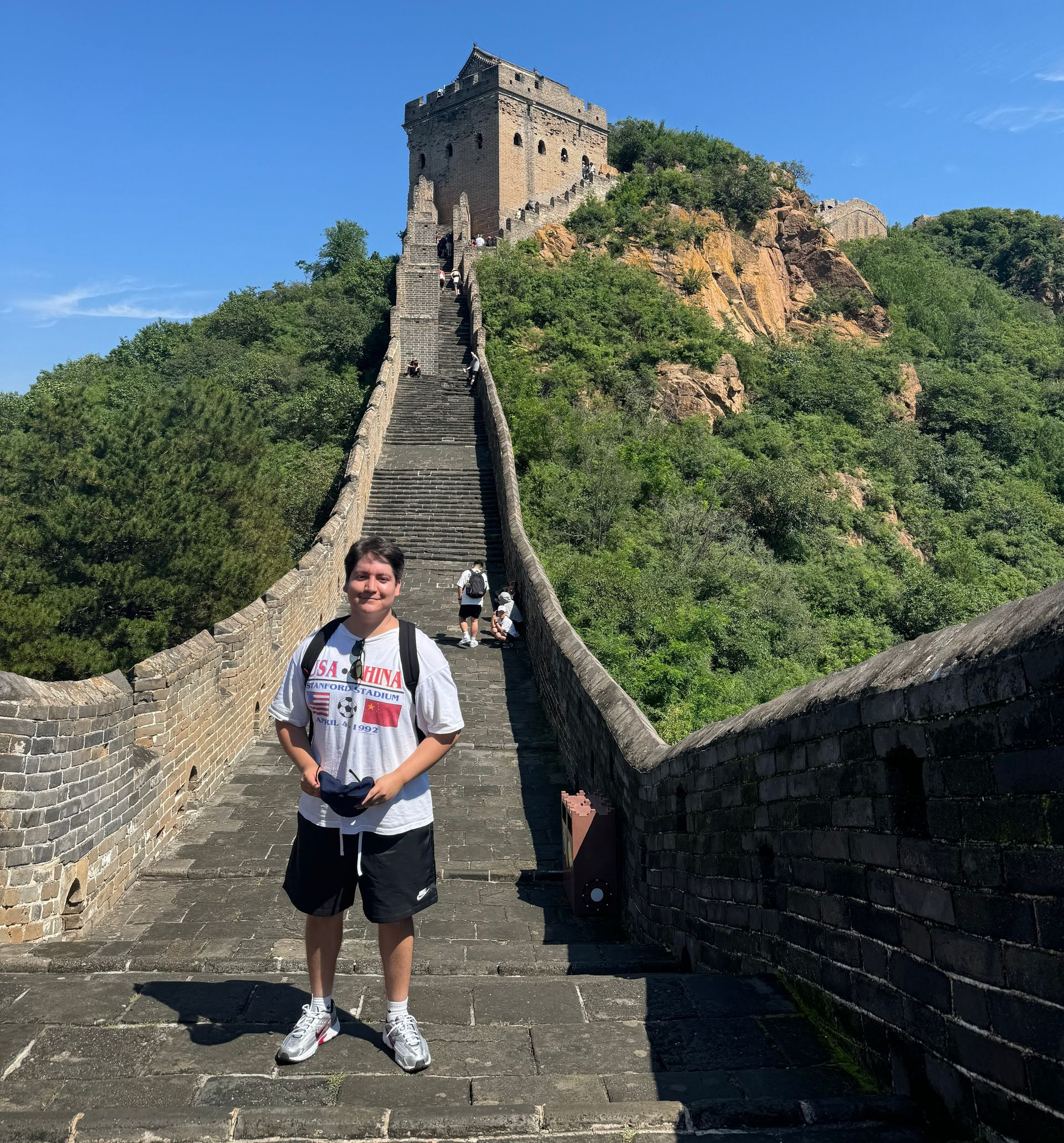
"I wanted to understand the world beyond my own perspective," he said. That desire took him to Beijing and to Schwarzman College at Tsinghua University, one of China's most prestigious institutions.
There, he studied alongside entrepreneurs, military veterans, nonprofit leaders, public servants, engineers, researchers, and future policymakers from around the world.
The classroom itself became a lesson.
Students approached problems differently.
They brought different assumptions, experiences, and perspectives shaped by the countries and communities they called home.
Conversations often challenged Kyle to reconsider how he viewed leadership, government, and public policy.
"The biggest question people ask is, 'Why China?'" Kyle said. "For me, it was an opportunity to understand a country and a culture that plays such an important role in the world, rather than relying on what I have traditionally heard from others."
What surprised him most was not the differences he encountered.
It was the common ground.
"We all care about our families, our future, our well-being, and our dreams," he said.
That connection stayed with him.
As someone who hopes to spend his career serving others, Kyle came to see that effective public service begins with understanding people as they are, not as we assume them to be.
"If I want to help people, I need to understand people."
The lesson extended far beyond China.
It became part of how he thinks about leadership, policymaking, and the responsibility of serving diverse communities.
Returning Home to Serve
Today, Kyle is putting those lessons into practice.
As a Jesse M. Unruh Assembly Fellow, he works at the center of policymaking in California, one of the world's largest economies.
Recently, two pieces of legislation he worked on successfully advanced through the legislative process.
For Kyle, those victories represent professional accomplishments and opportunities to improve people's lives.
Helping people remains the point.
Public service remains the mission.
And he still carries with him a lesson from his mother that has shaped many of the decisions throughout his life.
"Closed mouths don't get fed."
The phrase has become a personal philosophy.
Apply.
Ask.
Reach out.
Take the chance.
For Kyle, part of the mission now is helping more students discover opportunities they may not even know exist yet.

Learn More About Schwarzman Scholars
Schwarzman Scholars will participate in the PPIA Future Leaders Summit & Expo, giving students an opportunity to learn more about its one-year master's program at Tsinghua University in Beijing and explore a globally focused pathway for public service leadership.